

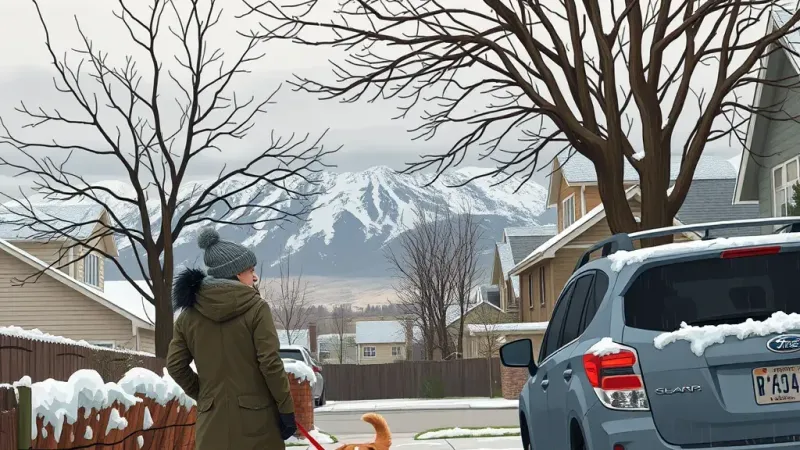
As Utah Breaking News, Top Stories & Sports | World, US, Local reported, a winter weather advisory has been issued for the Utah southern mountains as rain and snow return to the region following a recent lull in weather activity across the state. This incoming system brings notable changes to the area, affecting both mountainous terrain and lower-lying valley regions alike.
For the higher elevations in the Utah southern mountains, notable snowfall accumulations are expected as the system moves through the region. Specifically, two to five inches of snow are possible above eight thousand feet. Furthermore, even higher accumulation totals are anticipated at the highest elevations, where five to ten inches of snow are possible above nine thousand feet.
While the mountains prepare for accumulating snow, valley communities across the region are also in line for precipitation from the storm. According to the forecast details, valley communities could receive a quarter to a half-inch of precipitation as the rain and snow return following the recent lull.
The weather shift will also impact temperatures in other parts of the region. Along the Wasatch Front, high temperatures are forecast to drop into the upper forties or low fifties on Saturday. This cooling trend marks a stark contrast to the recent lull in weather conditions, signaling a broader atmospheric shift across the state of Utah.
Meteorological experts are closely monitoring the progression of this system as it arrives. "The conditions are about to change," Kevin Eubank told Utah Breaking News, Top Stories & Sports | World, US, Local, highlighting the immediacy of the approaching weather pattern.
Authorities and forecasters continue to track the storm's path and its potential impacts on both the southern mountains and the valley areas. Emphasizing the need for continued observation of the developing system, "We'll watch that one closely," Kevin Eubank told Utah Breaking News, Top Stories & Sports | World, US, Local, as residents across Utah prepare for the incoming rain, snow, and dropping temperatures.